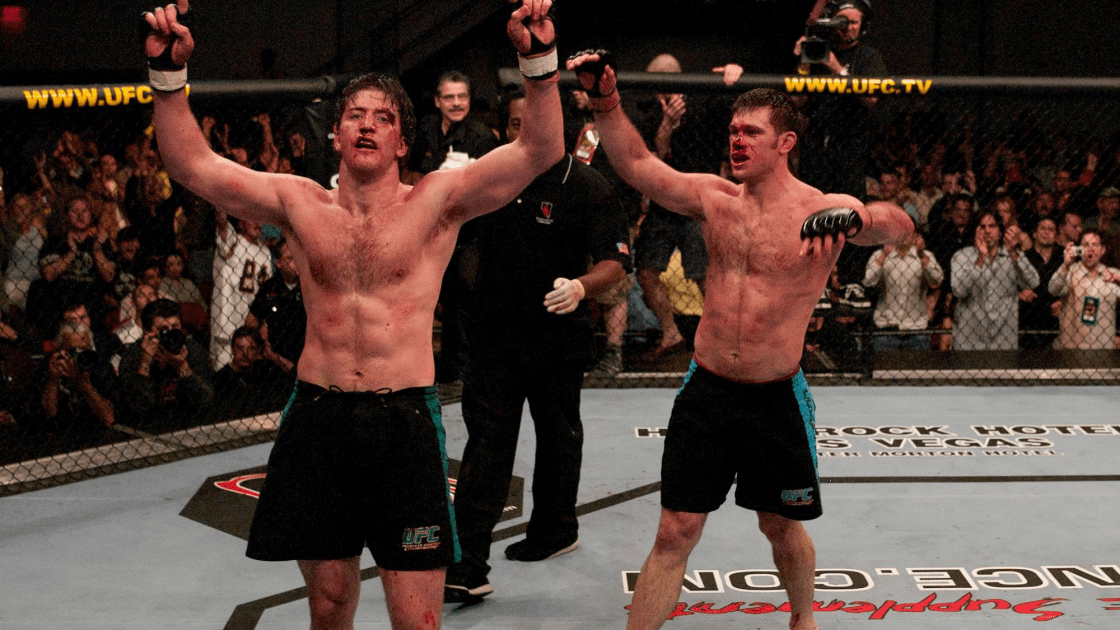
Tonight, a UFC tradition will be renewed for the first time in three years, when the company premieres the 29th season of The Ultimate Fighter, the reality show that over 15 years ago played a massive part in launching the UFC into the American mainstream.
As the story goes, in the mid-2000s, the UFC was in dire financial straits. Although it had developed some bankable stars, fighters like Chuck Liddell and Tito Ortiz, new owners Zuffa were still operating the promotion deep in the red, and mixed martial arts had struggled to find real purchase in the American sports landscape. Their last, best idea was a reality show, Big Brother with a more violent twist: lock a bunch of fighters in a house together, have them live, train and battle it out with one another, with the winners earning a six-figure UFC contract.
And again, as the story goes, the UFC could hardly get any TV networks to bite. it was only when the Fertittas offered to pay the production costs themselves that they got Spike TV, which had been interested in adding live sports programming, to add The Ultimate Fighter to its late Monday night schedule.
It succeeded beyond their wildest dreams. The Ultimate Fighter brought new eyes to the sport, humanized its athletes, and added a new element of drama to a sport many people in 2005 still thought of as “human cockfighting.” And in the finale, in the first MMA event ever broadcast live on cable TV in the United States, Forrest Griffin and Stephan Bonnar spellbound millions of viewers with what is still considered one of the greatest and most important fights in the UFC’s history.
The Ultimate Fighter served a dual purpose for the UFC for many years afterward: not only did it attract new viewers to the organization and make stars of its winners and standouts, but it provided a new avenue for top talent to make their way into the Octagon. The number of truly great fighters to get their start on TUF is impressive: 10 future UFC champions have lived in the TUF house, including Griffin, and many more TUF veterans have gone on to become world-class stars.
It’s impossible to tell the story of the UFC without mentioning The Ultimate Fighter, and it’s hard to quantify just how much the show has meant to the world’s biggest MMA organization. It makes some sense, then, why the UFC has had so much trouble letting TUF go. But heading into its 29th season, it’s hard to understand what the UFC thinks TUF can still be.
The Ultimate Fighter, of course, gave the UFC new life by introducing an entire new generation of fans to the sport and showing MMA in a completely new light. For quite a while afterward, TUF was always appointment viewing. But the announcement of season 29 came with little fanfare and seemingly little attention. The buzz around the show is gone. And no longer is it on a free cable station for someone to stumble upon: it’s now on ESPN+, behind a paywall. The only people who are going to watch The Ultimate Fighter are the hardcores.
But as previously mentioned before, TUF also served a strong practical purpose: replenishing the roster with new young talent. Look through the cast lists of the early seasons, and you see groups absolutely spoiling with future stars. But as the regional circuit becomes more and more plumbed by major organizations, those diamonds in the rough have been less common.
Most of the champion-caliber fighters produced by TUF in recent years have come in gimmick seasons, such as those that launched new divisions or had other different twists, such as the American Top Team vs. Blackzilians season that put Kamaru Usman on the UFC rolls. (Usman, by that point, was already well-known as one of the top unsigned prospects in the United States.)
Meanwhile, since TUF last aired in 2018, we’ve seen Dana White’s Contender Series become the main avenue for (especially American) unsigned fighters to earn spots in the UFC. The Contender Series has given the UFC a flood of cheap talent to fill out the low end of its now-weekly shows, and occasionally has produced some good fighters. The Contender Series will be running again throughout 2021, and there are some pretty interesting matchups announced for the first few weeks. The Ultimate Fighter, then, will be featuring mostly talent that isn’t quite good enough to fight at that level yet.
I delved into the cast of this season not too long after it was announced: like usual, it’s mostly a mish-mash of unknown regional prospects, most of whom have only a handful of pro fights, along with former Contender Series losers and the odd veteran like Josh Rettinghouse or Kemran Lachinov. Unlike Usman when appeared on the Blackzilians team six years ago, there are no tantalizing prospects that stick out. There could always be surprises, of course. Maybe someone like Ricky Turcios, who has shown some freewheeling striking flash in his early career, finds a groove and breaks out. But it’s seemed like a long time since we’ve seen something like that happen on TUF – perhaps as long as 2013, and the underdog arrival of Kelvin Gastelum.
TUF also served a third purpose in building up anticipation for a big fight between the show’s coaches: for instance, in the first season, the interaction between Chuck Liddell and Randy Couture helped make their rematch then the highest-grossing fight in UFC history. TUF has given us plenty of entertaining character moments with the UFC’s biggest stars, whether it be Rampage Jackson breaking a door, the scuffle between Chael Sonnen and Wanderlei Silva, or Cody Garbrandt‘s legendary hammered “HANGING WITH THE BOIIIIIZ” moment. This is the kind of stuff you get when you cram a bunch of hyped-up, testosterone-fueled dudes in their 20s into an isolated, confined space with access to seemingly unlimited alcohol and force them to fight each other.
But while coaches Alexander Volkanovski and Brian Ortega are two of the best featherweights in the world, and their title fight later this year should be one of 2021’s most fascinating matchups, they’re not particularly animated or charismatic characters and their interaction likely won’t be causing casual fans to tune in. We’ve seen it before on this show: just putting two great fighters together doesn’t necessarily mean fireworks. This time around, the conflict seems contrived. Their coaching rivalry will add little to the stakes of their title showdown.
Once the UFC’s last-gasp attempt at survival, The Ultimate Fighter has turned into one of the longest-running reality shows in America. But in 2021, it’s hard to figure out exactly what the UFC wants it to be. It had been off the air for three years, and no one was clamoring for its return. Now that it is back, it feels irrelevant. Maybe it was better served simply being allowed to fade into history, a cherished part of the UFC’s past.
 The Big Fight