Before mixed martial arts ever became a sport, before fighters ever became viewed as athletes – hell, before the term “MMA” even existed – the Ultimate Fighting Championship existed to do one thing: to dispel our popular myths about martial arts.
For most Americans, our exposure to martial arts came from action movies – in the early 90s, Steven Seagal was one of the most recognizable martial artists in the United States. People still thought that if you did karate a certain way, you could make a guy’s heart explode. But in November 1993, tens of thousands of people tuned in to a premiere pay-per-view event that showed the world that a real fight isn’t like a kung fu flick.
The international karate champion got his ass beat by a bigger, stronger kickboxer. The taekwondo expert lost in less than two minutes to a ripped pro wrestler who had done worked-shoot fights in Japan. The winner was a shrimpy guy who had mastered something called “Brazilian jiu-jitsu.” Real fights weren’t flashy, stylish and cinematic. They were nasty, brutish and bloody. And all of a sudden, Bruce Lee was no longer the ideal – if he tried to step into the Octagon, he’d probably get his ass kicked.
The sport grew, evolved and changed in the years to come. But the biggest stars in the UFC were, for many years, decidedly unstylish. Guys like Tito Ortiz, Matt Hughes and Randy Couture became stars with their takedowns and ground-and-pound. Chuck Liddell provided some awesome highlights, but he was a prototypical sprawl-and-brawl fighter who mostly put opponents away with heat-seeking flurries of punches. Great fighters all, but no one who truly captured the imagination.
But in 2006, a new fighter arrived who was like nothing any UFC fan had ever seen before. Anderson Silva was a Pride veteran who had established himself as one of the most promising and talented strikers in MMA, but had been held back by a weakness against highly skilled grapplers – losses to guys like Ryo Chonan and Daiju Takase still stand out on his record.
There was considerable intrigue when he signed with the UFC, but many tipped Silva to lose his debut against Chris Leben, who embodied the type of fighter who had previously thrived in the UFC: a tough white guy with bad tattoos, a stout chin, heavy hands and little artistry to his game. Silva could do some cool and fancy things, but all his aesthetically pleasing kicks, elbows and knees would break against this hard bastard charging at him.
What ensued was one of the most immaculate beatdowns in UFC history.
A few months later, Silva grabbed middleweight champion Rich Franklin in a Thai clinch, never let go, and kneed him until the belt was his. A new era had been born. Silva’s title reign lasted seven years and 11 title defenses, and by the time it ended, he was almost universally regarded as the greatest fighter of all time. It was not just that Silva won, again and again. It was how he won: with style, with grace, with an absolute mastery of his craft.
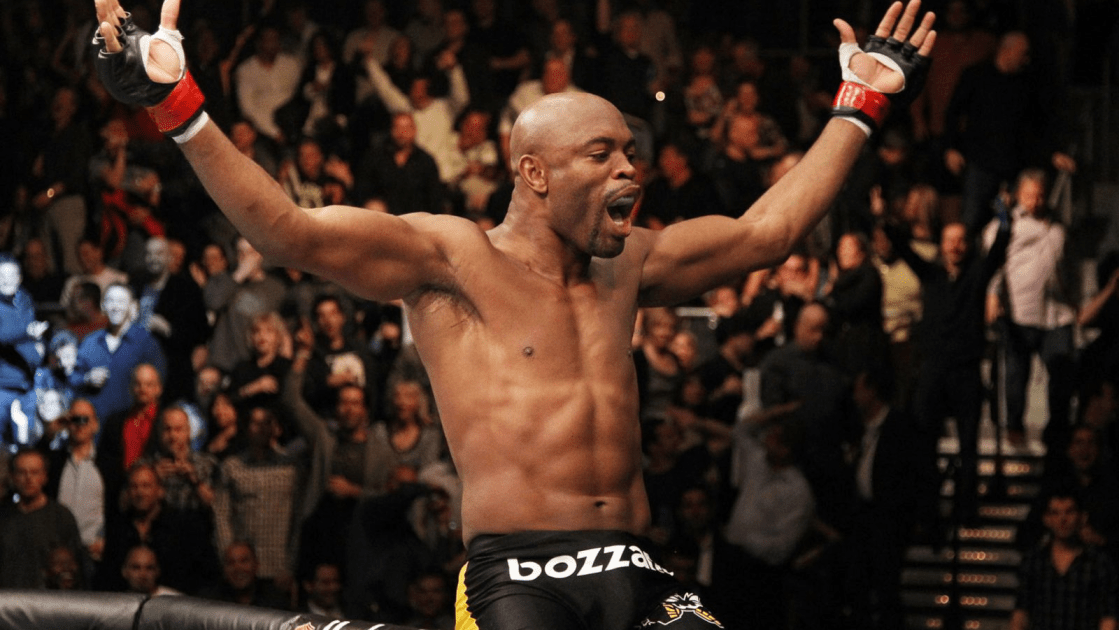
Anderson Silva fulfilled the original promise and ideal of mixed martial arts. When the first fans tuned into the Ultimate Fighting Championship in the fall of 1993, they envisioned the eventual champion looking something like him. He destroyed his opponents in beautiful and artful ways. When the climactic moment came, he always produced something special to triumph over his opponents. He showed us that a cagefight could be cinematic. And after all those years, he made you start to think: maybe Bruce Lee could have done OK.
Few fighters have produced as many magic moments as Silva did in his career. The front kick that knocked rampaging beast Vitor Belfort out cold. The astonishing comeback against Chael Sonnen, in what is still one of the most shocking moments in UFC history. The absolutely unforgettable Matrix-style destruction of Forrest Griffin, in what I still see as the single greatest individual performance the sport has ever seen.
Over time, Silva seemed to become so far removed from mortal men that it became almost impossible to conceive that he’d ever lose. He did, of course – he dropped the title to heavy-handed wrestle-boxer Chris Weidman in July 2013, then lost the rematch when Weidman checked a Silva leg kick and the former champion’s leg freakishly snapped in two.
He lost plenty more times in the years to come. In his final nine fights, he lost seven. The skills were undoubtedly still there, but Father Time is undefeated: his punches didn’t have the same zip, and his chin couldn’t withstand the power of fighters 10 years younger.
On Saturday, in what promised to be Silva’s final fight in the UFC, the legend was winning through three rounds against the hulking Uriah Hall. Hall looked almost intimidated going against one of the sport’s all-time greats – Silva looked loose, quick and confident, and he showed some flashes of his younger self with his deceptive movements and diverse strikes. If it was a three-round fight instead of a five-rounder, he would have taken home the decision win. But when Hall finally landed one of his powerful right hands, the 45-year-old Silva could no longer hold up. Hall dropped him with a counter right seconds before the third round bell, and knocked Silva out early in the fourth.
But a funny thing happened when the fight was over. Usually, when we see an old legend, past his prime, get knocked out, it’s a depressing affair. We wonder why they’re doing this in the first place, and why they’re still even allowed to step into the cage. But when Silva-Hall was over, it wasn’t depressing at all. Silva smiled, gave Hall a hug, and congratulated him on his victory. The prevailing mood was appreciation for one of the most iconic fighters to ever grace the UFC arena. It isn’t usually this positive.
But that’s how great Anderson Silva was. Sure, he held on too long. Sure, he lost a bunch at the end. But he was such an undeniable legend that we didn’t mind having him around – even when he was losing, just having him in the cage was a reminder of better times. Of the awe he inspired when he was at his best. At the giddy feeling he inspired when he worked his magic.
There has never been anyone like Anderson Silva. There may never be another fighter like Anderson Silva. He was the fighter who fulfilled the original promise of the UFC, the original conception of what it could be. Anderson Silva brought the “art” back to the name “mixed martial arts,” and changed the sport forever.
 The Big Fight